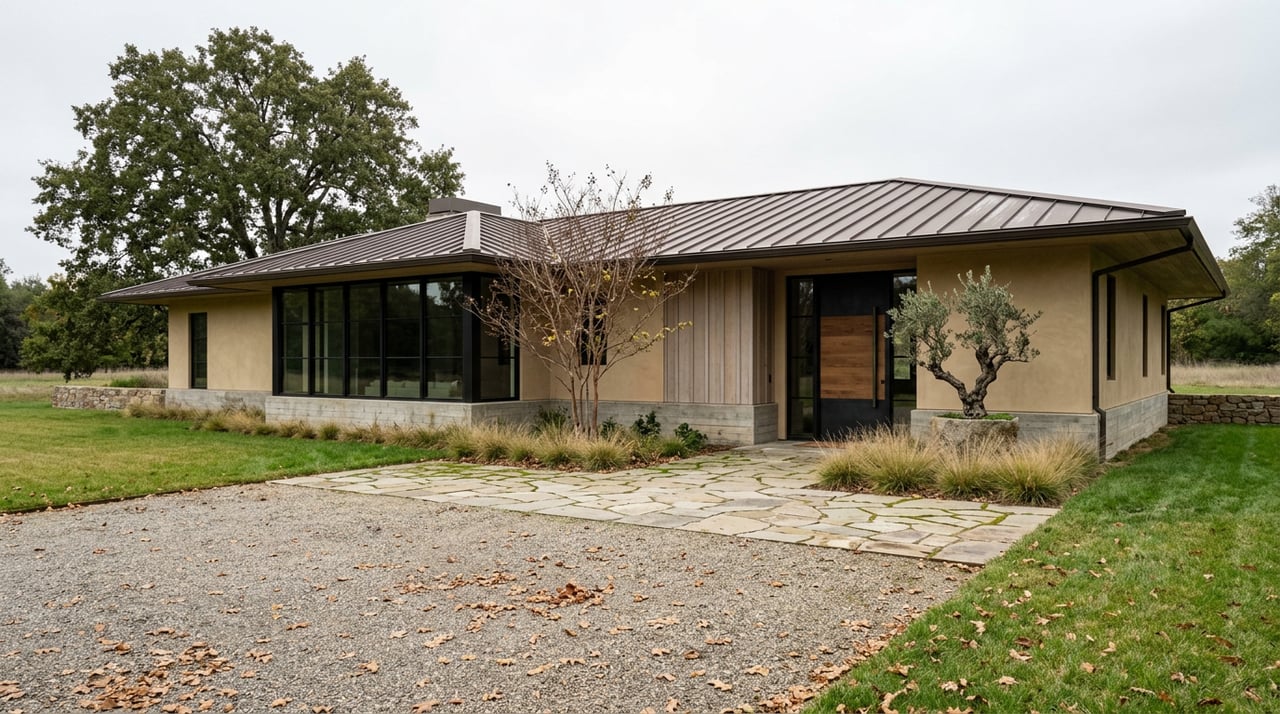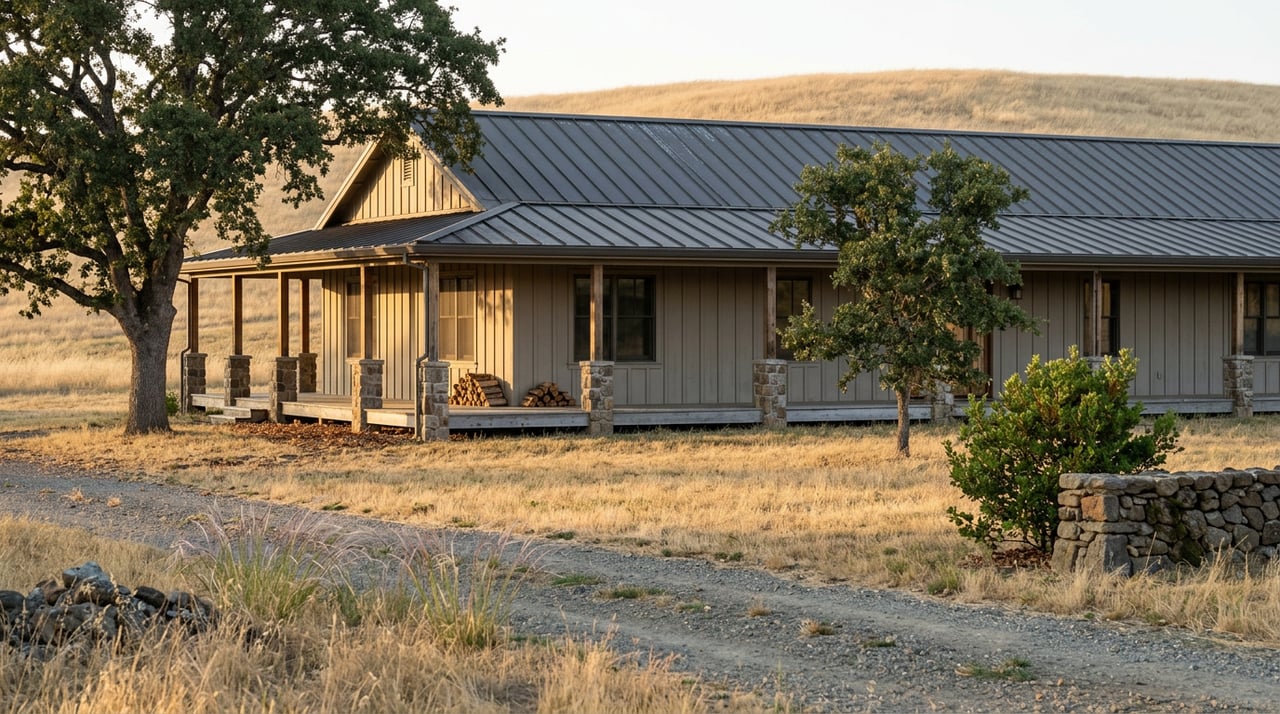
A buyer standing on a parcel off Hornitos Road may see rolling hills, oak-studded pasture, and a ranch fence disappearing into the next property over, and imagine that Catheys Valley will always look this way. The rural setting can make future development seem remote.
Scenery alone does not explain how land use may evolve here, so it's worth understanding the context before you sign anything.
Catheys Valley's rural character isn't held in place by distance or by zoning maps alone. It's held in place by two specific, checkable pieces of paperwork: a county community plan that channels growth onto three named roads, and a set of twenty-year agricultural tax contracts that almost never get cancelled. Neither one shows up in a listing photo. Both of them matter more to long-term land value than the view does.
Three Roads, Not a Grid
The Catheys Valley Community Plan covers about 26.2 square miles, roughly 16,752 acres, and it manages growth through a structure that's easy to overlook if you're only looking at a for-sale sign. Residential land use is kept along Hornitos Road, Highway 140, and Schoolhouse Road. Everything surrounding those corridors is agriculture and ranch land, and it can't be converted to other uses without clearing the county's general plan policies on agricultural land conversion.
Commercial development gets the same kind of containment. Instead of letting stores and services spread along Highway 140 the way they do in a lot of foothill towns, the plan clusters commercial activity off the highway, near the Hornitos Road extension, at a scale meant to serve the local community rather than pull in regional traffic. The design standards that go with it call for a rustic, western-village character and specifically aim to keep out the generic suburban strip-mall look that's crept into other parts of the Sierra foothills as development has pushed east from the Central Valley.
That's a plan, though, not a law of nature. Plans get amended. What actually backs this one up is something with more teeth.
A Contract Older Than Most Deeds
Much of the agricultural and ranch land surrounding those three roads sits under a Williamson Act contract, part of roughly 207,500 acres of Williamson Act land in Mariposa County concentrated along the Merced-Mariposa county line, running in broad ranch country along Highway 140 to the western edge of Catheys Valley.
These contracts run for twenty-year terms, and county records show that to date, no Williamson Act land in Mariposa County has successfully completed cancellation, with one exception: a 3.5-acre portion. That's not a policy preference. That's two decades of actual outcomes.
For a buyer, the practical read is this: land under an active Williamson Act contract isn't just currently agricultural. It's committed to staying agricultural for a long runway, and the county's own track record suggests that commitment is close to permanent in practice, whatever the theoretical exit path looks like on paper. If a parcel you're evaluating sits inside that ring of contracted land, its future use is a lot more locked in than the surrounding fence line suggests.
That's also why the idea that "it'll always look like this" is half right for the wrong reason. It's not that nobody wants to build here. It's that the land under contract has a very high bar to being released for anything else.
The Gate Closed Twenty Miles Away
The reason the growth pressure is aimed at Catheys Valley in the first place has almost nothing to do with Catheys Valley.
The county's own planning documents describe a 32,000-acre conservation easement recorded between the town of Planada, in unincorporated Merced County, and the Mariposa County line. The practical effect is that there is little to no private land left available for future development along Highway 140 in eastern Merced County. The corridor that would normally absorb growth pushing east from Merced and the San Joaquin Valley has been largely closed off.
The same planning document is candid about what that means for Catheys Valley: it's the first cluster of residential and commercial services encountered traveling east from San Joaquin Valley metro areas, and the plan describes the community as sitting "in the path" of future growth pressure. When one door closes twenty miles away, the pressure doesn't disappear. It moves to the next place that still has room, and that's the corridor running through Catheys Valley.
That reframes the whole question of land value here. You're not just buying a parcel with a nice view and a quiet road. You're buying a parcel inside the one remaining gap in a corridor where the county has deliberately narrowed where growth is allowed to land, backed by a set of agricultural contracts that have proven durable for decades and a Merced County easement that's already taken the alternative off the table.
What a Buyer Actually Needs to Check
None of this is a reason to avoid Catheys Valley. It's a reason to ask sharper questions before you write an offer, since the mechanisms above aren't uniform across every parcel in the valley.
- Ask whether the specific parcel is currently enrolled in a Williamson Act contract, and if so, where it sits in its contract term. Not every agricultural-looking property in the area is actually under contract.
- Check whether the parcel falls inside the Community Residential land use designation along Hornitos Road, Highway 140, or Schoolhouse Road, or in the surrounding Agriculture/Working Landscape zone, since that determines what kind of development the county plan actually permits.
- If you're buying with future subdivision or commercial use in mind, confirm whether the site is anywhere near the designated Community Commercial cluster off Highway 140, since that's the only area the plan actively designs for that kind of use.
- Ask your title company or the county assessor's office directly about contract status rather than assuming it from the fencing or the crop in the field. Williamson Act enrollment isn't always visible from the road.
None of this replaces advice from your own attorney, tax professional, or the county planning department directly on your specific parcel. But knowing which questions to ask before you're in escrow saves a lot of surprise later.
A Few Questions Worth Settling Early
What should a buyer check about a Williamson Act contract? Confirm the specific status and any pending non-renewal filings with the county before closing.
Can commercial development happen along Highway 140 itself, closer to the road? The community plan's stated intent is to keep that corridor residential and agricultural, with commercial growth directed toward the cluster near the Hornitos Road extension instead.
Is all the surrounding ranch land under contract, or just some of it? Only a portion is, concentrated mainly along the Merced-Mariposa county line. Land elsewhere in the valley may or may not be enrolled, so this has to be verified parcel by parcel rather than assumed for the area as a whole.
If you're weighing a ranch parcel, an acreage listing, or a home along one of these three roads and want a clearer read on what's actually protected and what's just quiet for now, Concierge Homes works this corridor directly and can walk through the specifics with you before you're deep into an offer.
This article is general information, not legal, tax or financial advice. Consult a qualified professional about your situation.